API Keys are secure tokens used to authenticate requests to Orq.ai. Each key is scoped to a single project and carries a set of permissions that control what it can do.Two key types are available, chosen by the key’s owner.
Tied to a specific user account and project. Automatically revoked if the user is removed from the organization or project. Use user keys for personal use and local development.
Not tied to any individual user, with a lifecycle independent of user membership. Only workspace admins can create service account keys. Use service account keys for production systems, so access does not break when a team member leaves.
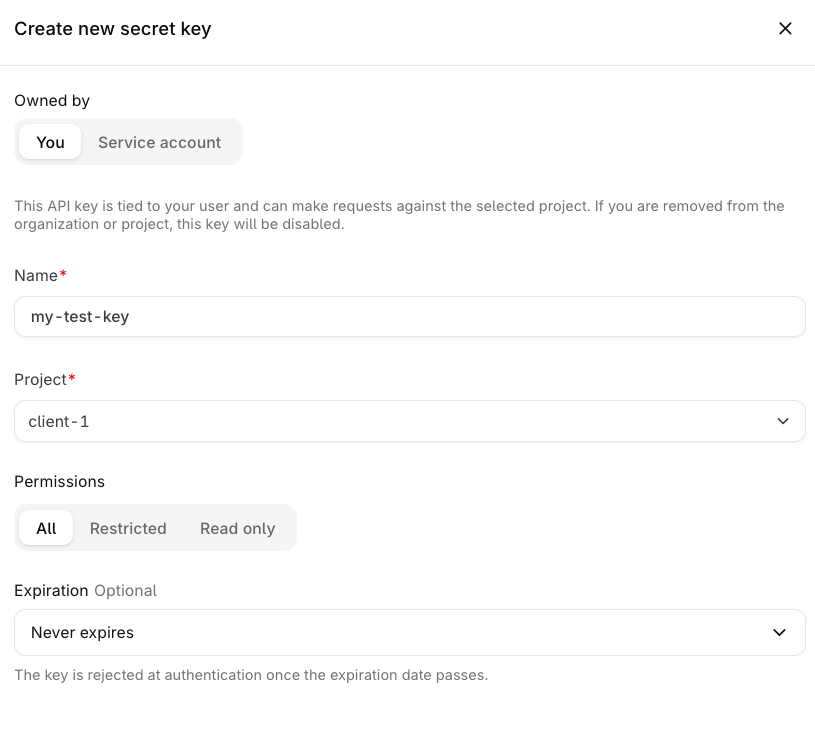
Navigate to Settings > API Keys and select Secret key. The Create new secret key sheet opens with Owned by, Name, Project, Permissions, and Expiration.
The Create new secret key sheet.
2
Choose an owner
Under Owned by, select You to create a User key, or Service account to create a key not tied to any individual user.
3
Set name and project
Enter a Name for the key and select the Project it will have access to.
4
Set permissions
Choose a permission preset. See Permissions below.
5
Set expiration (optional)
Set an Expiration date if the key should automatically become inactive after a certain date.
6
Create and copy the key
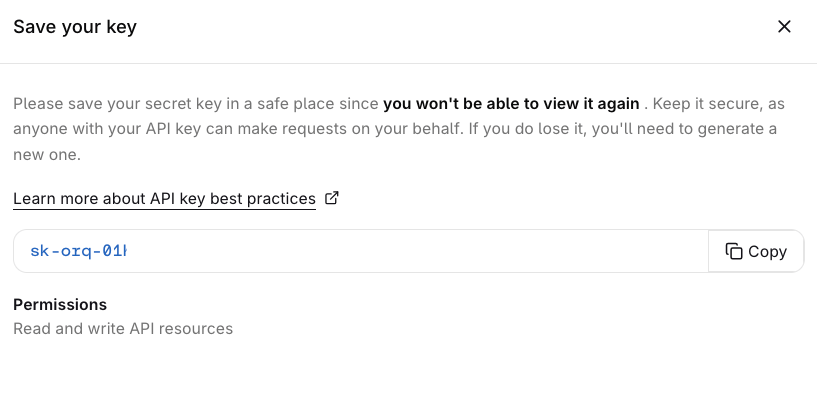
Select Create secret key. A Save your key dialog appears showing the token and its permissions summary.
The Save your key dialog appears once after creation.
Click Copy to copy the token.
The token is only shown once. Store it securely before closing this dialog. It cannot be retrieved afterwards.
To cap a key’s cost, token, or requests-per-minute usage, attach a Budget to it. Budget limits reset on the period you configure.
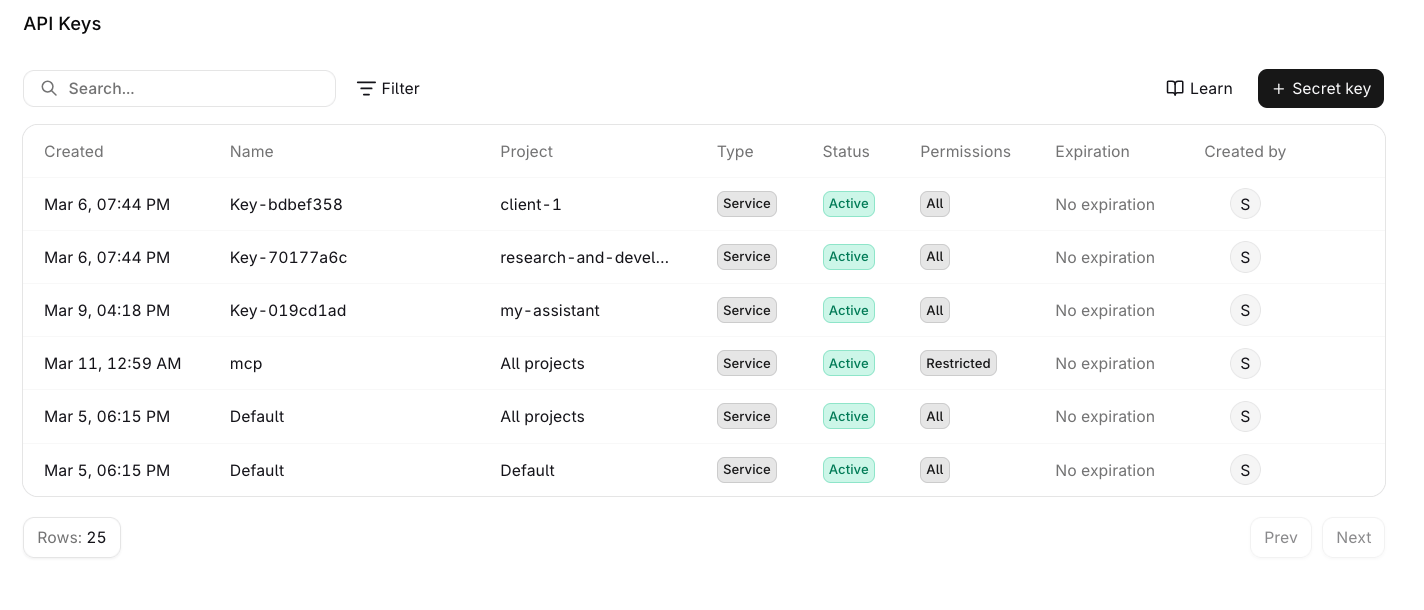
The API Keys management table showing all keys, their type, status, permissions, and actions.
Select the menu on any key to access the following actions:
Edit: update the name, permissions, or expiration date. The owner type cannot be changed after creation.
Duplicate: opens the creation panel pre-filled with the key’s current settings.
Delete: permanently removes the key. This cannot be undone.
A Revoked status means the key belonged to a user who was removed from the organization or project, or it has been revoked manually. Revocation is permanent.
To rotate a key, or to find where every other kind of secret is stored, see Secrets management.
Was this page helpful?
Assistant
Responses are generated using AI and may contain mistakes.